
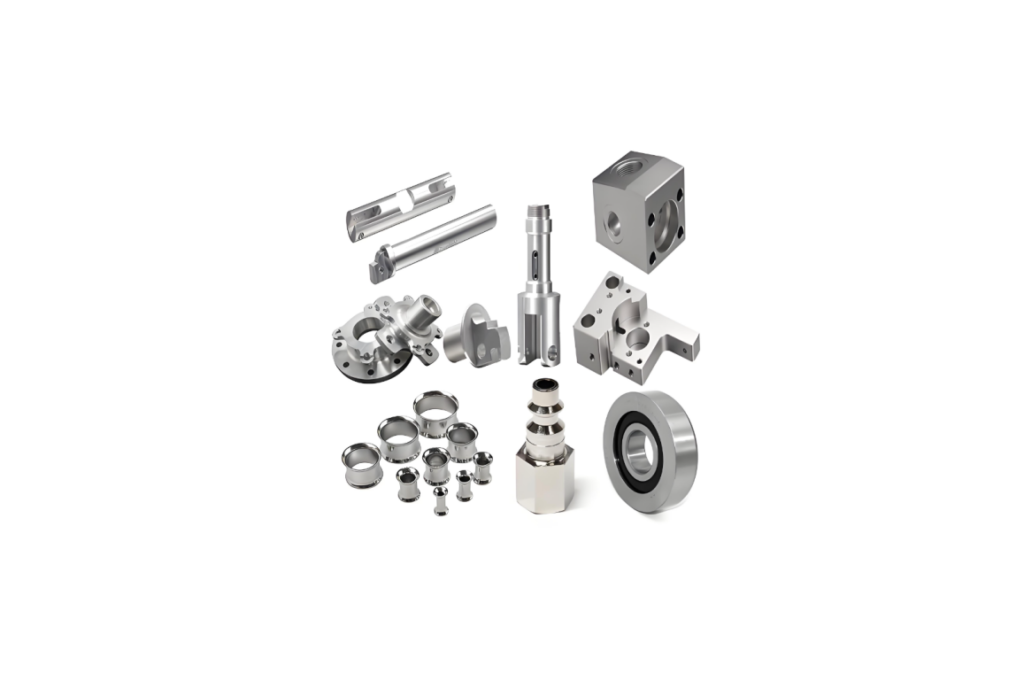
Introduction
Stainless steel is one of the most widely used materials in industries such as aerospace, medical devices, food processing, and automotive. Its excellent corrosion resistance, strength, and durability make it a top choice for critical components. However, many engineers and manufacturers ask: Can stainless steel be CNC machined? The answer is yes, but it comes with unique challenges that require specialized techniques. In this article, we explore the challenges of CNC machining stainless steel and the techniques for effective CNC machining of stainless steel to achieve high-quality results.
Understanding the Challenges of CNC Machining Stainless Steel
Stainless steel is an alloy of iron, chromium, nickel, and other elements. While these elements provide desirable properties, they also create difficulties during machining. Key challenges include:
Work Hardening
Stainless steel tends to work-harden rapidly under cutting action. If the cutting tool rubs instead of shears, the material surface becomes harder, making subsequent passes difficult and accelerating tool wear. This is especially problematic for austenitic grades like 304 and 316.
High Cutting Temperatures
Stainless steel has low thermal conductivity, so heat generated during machining concentrates at the cutting edge. This can lead to thermal softening of the tool, built-up edge, and poor surface finish. Without proper cooling, tool life decreases significantly.
Tool Wear and Tearing
The abrasive nature of carbide inclusions in stainless steel causes rapid flank wear and crater wear. Additionally, the material’s toughness can cause tearing rather than clean shearing, leading to rough surfaces and burrs.
Chip Control Issues
Stainless steel produces long, stringy chips that can entangle the tool and workpiece, causing vibration and poor chip evacuation. This increases cycle time and risks damaging the part.
Techniques for Effective CNC Machining of Stainless Steel
To overcome these challenges, manufacturers must adopt specific strategies. Below are proven techniques for effective CNC machining of stainless steel.
Select the Right Cutting Tool
Use carbide tools with sharp cutting edges and a positive rake angle. Coatings such as TiAlN or AlTiN reduce friction and heat. For finishing, use tools with a small corner radius to distribute cutting forces. Avoid high-speed steel (HSS) as it wears quickly.
Optimize Cutting Parameters
- Cutting speed: Lower speeds (50–80 SFM for austenitic stainless steel) reduce heat generation. Use recommended speeds from tool manufacturers.
- Feed rate: Use moderate to high feed rates (0.004–0.012 in/rev) to ensure the tool cuts rather than rubs, minimizing work hardening.
- Depth of cut: For roughing, take a depth of 0.04–0.12 in. For finishing, use 0.005–0.02 in to maintain tolerances.
Use Effective Cooling and Lubrication
High-pressure coolant (800–1000 psi) directed at the cutting zone helps dissipate heat and flush chips. Flood coolant with a concentration of 5–10% water-soluble oil is standard. For deep holes, use through-spindle coolant.
Implement Proper Chip Breaking Strategies
Use chip breakers on inserts or peck drilling cycles to break chips. For turning, choose inserts with chip former geometry. For milling, climb milling reduces chip thickness and improves chip evacuation.
Consider Machine Rigidity
A rigid machine setup minimizes vibration. Use short tool overhangs, secure workholding, and avoid chatter. For complex parts, consider 5-axis CNC machining to reduce setups and improve accuracy.
Best Practices for Specific Operations
Turning Stainless Steel
Use a lead angle of 45–60 degrees to reduce cutting forces. Maintain a constant chip thickness by using a constant feed rate. For finishing, use a wiper insert to improve surface finish.
Milling Stainless Steel
Use high-feed mills for roughing and solid carbide end mills for finishing. Apply a radial engagement of 30–50% to distribute wear. For thin walls, use trochoidal milling paths to reduce heat and vibration.
Drilling Stainless Steel
Use cobalt or carbide drills with a split point. Peck drilling with a depth of 0.5–1 times the diameter helps break chips. Apply a high-pressure coolant to evacuate chips.
Tapping Stainless Steel
Use roll form taps for small threads (up to M6) to avoid chip problems. For larger threads, use spiral point taps. Apply thread cutting oil to reduce friction.
Material-Specific Considerations
Austenitic grades (304, 316) are most challenging due to work hardening. Ferritic and martensitic grades (410, 430) are easier to machine but require sharp tools. Precipitation-hardening grades (17-4 PH) offer a balance of strength and machinability. Always consult material data sheets for recommended parameters.
Conclusion
CNC machining stainless steel is feasible with the right approach. By understanding the challenges of CNC machining stainless steel and applying the techniques for effective CNC machining of stainless steel, manufacturers can produce high-quality parts efficiently. At Mossuun, we specialize in precision CNC machining of stainless steel and other materials. Our advanced equipment, including CNC turning and 5-axis machining, ensures tight tolerances and excellent surface finishes. If you have a stainless steel project, contact us today for a quote and expert guidance.