
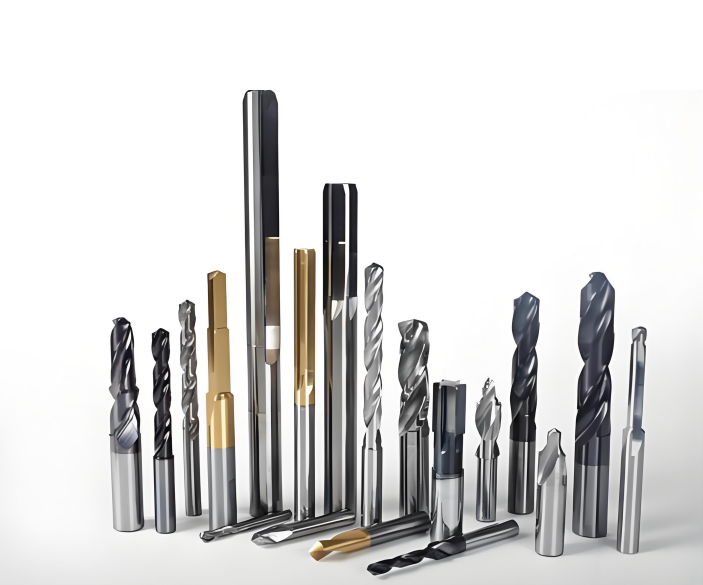
Introduction to CNC Machining Tools
CNC machining tools are the cutting implements used in CNC machines to remove material from a workpiece, shaping it into a desired part. These tools are fundamental to the precision manufacturing process, enabling the production of complex components with tight tolerances. At Mossuun, we leverage a wide range of CNC machining tools to deliver high-quality parts for aerospace, automotive, medical, and other industries. Understanding what these tools are, how they differ from the machines themselves, and how to select the right ones is crucial for optimizing your manufacturing projects.
What Is the Difference Between a CNC Machine and CNC Tools?
It’s a common confusion: a CNC machine is the entire system—the framework, motors, controllers, and workholding devices—that moves the tool or workpiece automatically. The CNC tool, often referred to as a cutting tool, is a specific component that physically contacts the material to cut, drill, or shape it. Think of the machine as the body and the tool as the hand that does the work. Each CNC machine can use various tools depending on the operation, and the choice of tool significantly impacts the machining outcome.
Types of CNC Machine Tools
CNC machine tools can be broadly categorized by their function. The most common types include:
- Milling Tools: Used on CNC milling machines, these rotate to remove material. They come in various shapes, such as end mills, face mills, and ball nose cutters.
- Turning Tools: Used on CNC turning centers, these are stationary and cut as the workpiece rotates. Common examples include boring bars, parting tools, and threading tools.
- Drilling Tools: Designed to create holes, such as twist drills, center drills, and reamers.
- Boring Tools: Used to enlarge existing holes with high precision.
- Threading Tools: Create internal or external threads, including taps and thread mills.
Each tool type is further specialized for specific materials and geometries. For instance, 5-axis CNC machining often requires specialized tools that can access complex angles without collision.
Common Types of CNC Machining Cutting Tools
Within the categories above, there are several standard cutting tools that every machinist should know:
End Mills
End mills are the most versatile tools for milling. They cut with both the end and sides, allowing for profiling, slotting, and contouring. They come in various geometries—flat, ball nose, and corner radius—each suited for different surface finishes and features.
Face Mills
Face mills have replaceable carbide inserts and are used for facing large flat surfaces. They provide excellent surface finish and high material removal rates.
Drill Bits
Twist drills are the standard for creating holes. For high-precision holes, center drills or spot drills are used first to guide the drill accurately.
Reamers
Reamers are used to finish holes to a precise diameter with a smooth finish. They remove only a small amount of material after drilling.
Taps and Dies
Taps create internal threads, while dies create external threads. In CNC machining, tapping is often done with a tapping head or a rigid tap.
Inserts
Indexable inserts are replaceable cutting edges that fit into tool holders. They are made from carbide, ceramics, or CBN, and are used in face mills, turning tools, and boring bars. They offer cost-effectiveness and consistent performance.
How to Choose the Right CNC Machining Tools
Selecting the proper tool is critical for efficiency, quality, and cost. Here are key factors to consider:
Material of the Workpiece
Different materials require different tool materials and geometries. For example, aluminum can be machined with high-speed steel (HSS) or carbide tools, while hardened steels need carbide or ceramic tools. Softer materials allow for higher speeds and positive rake angles, while harder materials require negative rake angles for strength.
Type of Operation
Roughing operations need tools with high material removal rates, such as face mills with multiple inserts. Finishing operations require tools with sharp edges and tighter tolerances, like end mills with a small corner radius.
Machine Capability
Your CNC machine’s spindle speed, power, and rigidity influence tool choice. For high-speed machining, use tools designed for those parameters. For 5-axis machines, consider tools with longer reach to avoid collisions.
Desired Surface Finish
The finish required on the part dictates the tool’s geometry and feed rates. For a mirror finish, use a wiper insert or a high-polish end mill with a fine feed.
Tool Coating
Coating like TiN (titanium nitride) or AlTiN (aluminum titanium nitride) extends tool life by reducing friction and heat. Choose coatings based on the material being cut and the cutting speed.
Tool Holder Compatibility
Ensure the tool shank matches your machine’s tool holder (e.g., CAT, BT, HSK). Proper clamping is essential to prevent vibration and runout.
Best Practices for Tool Maintenance and Optimization
To get the most out of your CNC machining tools, follow these best practices:
- Regular Inspection: Check for wear, chipping, or built-up edge. Replace tools before they fail to avoid damaging the workpiece.
- Proper Speeds and Feeds: Use recommended cutting parameters for the tool and material. Incorrect speeds can cause premature tool failure.
- Use Coolant Effectively: Coolant helps flush chips and reduce heat. Ensure the coolant reaches the cutting zone.
- Tool Path Optimization: Use CAM software to generate efficient tool paths that minimize tool engagement and stress.
- Store Tools Properly: Keep tools in a dry, protected environment to prevent corrosion and damage.
At Mossuun, our engineers meticulously select and maintain tools for every project, ensuring optimal performance and part quality. Whether you need CNC milling, CNC turning, or 5-axis machining, we have the expertise to handle your requirements.
Conclusion
Understanding CNC machining tools is essential for anyone involved in manufacturing. They are the key to achieving precision, efficiency, and cost-effectiveness. By knowing the differences between machines and tools, the common types, and how to select them, you can make informed decisions for your projects. If you have any questions or need assistance with your next CNC machining project, contact Mossuun today. Our team is ready to provide you with high-quality, precision-machined parts tailored to your specifications.