
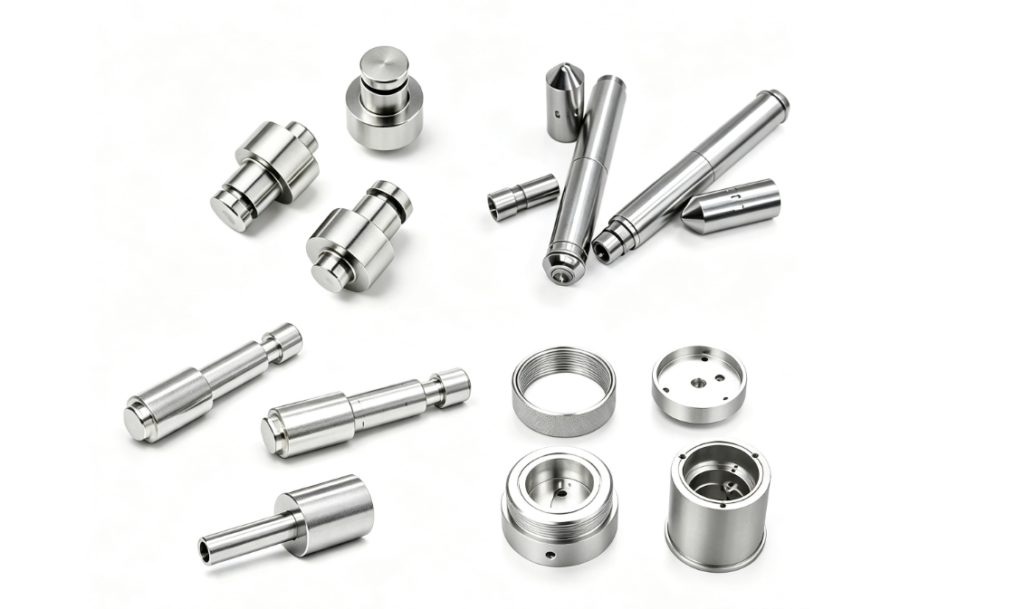
Introduction: Choosing the Right Material for CNC Machining
When planning a CNC machining project, one of the most critical decisions is selecting the appropriate material. The choice between stainless steel, aluminum, and titanium can significantly impact performance, cost, and manufacturability. Each metal offers distinct properties that suit different applications, from aerospace components to medical devices and automotive parts. This article provides a comprehensive comparison to help you determine which material fits your specific needs.
Overview of Material Properties
Stainless Steel
Stainless steel is an iron alloy with a minimum of 10.5% chromium, which gives it excellent corrosion resistance. It is known for its high strength, durability, and ability to withstand extreme temperatures. Common grades include 304 and 316, with 316 offering superior resistance to chlorides and acids.
Aluminum
Aluminum is a lightweight, silvery-white metal known for its excellent strength-to-weight ratio and natural corrosion resistance. It is highly machinable and conducts heat and electricity well. Alloys like 6061-T6 and 7075-T6 are popular in CNC machining due to their balanced mechanical properties.
Titanium
Titanium is a transition metal prized for its exceptional strength-to-weight ratio, corrosion resistance, and biocompatibility. It is as strong as steel but 45% lighter, making it ideal for aerospace and medical implants. Grade 5 (Ti-6Al-4V) is the most widely used alloy.
Machinability Comparison
Aluminum: The Easiest to Machine
Aluminum is renowned for its excellent machinability. It cuts smoothly, produces consistent chips, and allows for high cutting speeds. This results in shorter cycle times and lower tool wear, making it a cost-effective choice for prototyping and production runs. However, its softness can lead to built-up edge if not handled correctly, but with proper tooling and coolant, it’s straightforward.
Stainless Steel: Moderate but Demanding
Stainless steel is more challenging to machine than aluminum due to its toughness and work-hardening tendencies. It requires slower speeds, higher cutting forces, and robust tooling. Using sharp inserts and adequate coolant is essential to prevent work hardening and achieve a good surface finish. Despite the difficulty, modern CNC machines and tooling can handle stainless steel efficiently.
Titanium: The Most Difficult
Titanium is notoriously difficult to machine. Its low thermal conductivity causes heat to concentrate at the cutting edge, leading to rapid tool wear. It also has a tendency to gall and smear. Successful machining of titanium requires rigid setups, sharp tools, low cutting speeds, and high-pressure coolant. This increases machining time and cost, but for high-performance applications, it’s often unavoidable.
Cost Considerations
Material cost and machining cost are significant factors in any project. Aluminum is the least expensive of the three, both in raw material and machining time. Stainless steel is moderately priced but more costly to machine than aluminum. Titanium is the most expensive material and also incurs the highest machining costs due to longer cycle times and frequent tool changes. For large production runs, aluminum offers the most economical solution, while titanium is reserved for applications where its unique properties are essential.
Application Suitability
When to Choose Stainless Steel
- Corrosion resistance: Ideal for marine, chemical, and food processing equipment.
- Strength and durability: Suitable for structural components, fasteners, and heavy-duty parts.
- Temperature resistance: Performs well in high-temperature environments.
- Examples: Shafts, gears, valves, and enclosures.
When to Choose Aluminum
- Lightweight: Perfect for aerospace, automotive, and consumer electronics where weight matters.
- Thermal and electrical conductivity: Used in heat sinks, housings, and electrical connectors.
- Machinability: Ideal for complex geometries and rapid prototyping.
- Examples: Brackets, enclosures, chassis, and custom parts.
When to Choose Titanium
- High strength-to-weight ratio: Critical in aerospace and motorsports.
- Biocompatibility: Used for medical implants and surgical instruments.
- Corrosion resistance: Excellent in saltwater and chemical environments.
- Examples: Aircraft components, prosthetic joints, and high-performance racing parts.
Surface Finish and Tolerances
All three materials can achieve fine surface finishes and tight tolerances with CNC machining. Aluminum typically yields the best surface finish due to its softness and machinability. Stainless steel can achieve a mirror finish with proper polishing, but machining marks may be more evident. Titanium can also be finished well, but its hardness requires careful polishing. In terms of tolerances, all can hold ±0.005 mm or better, but titanium’s thermal expansion may require adjustments.
Weight and Strength: Balancing Trade-offs
If weight is a primary concern, aluminum is the lightest, but titanium offers the highest strength-to-weight ratio. Stainless steel is the heaviest but provides high strength. For example, a titanium part can be lighter than a stainless steel part of the same strength, but more expensive. Aluminum may be sufficient for non-critical applications.
Corrosion Resistance and Environmental Factors
Stainless steel and titanium excel in corrosive environments. Stainless steel is resistant to many chemicals but can suffer from pitting in chloride-rich settings; 316 grade mitigates this. Titanium is virtually immune to corrosion in seawater and most industrial chemicals. Aluminum naturally forms a protective oxide layer, but it is susceptible to galvanic corrosion when in contact with dissimilar metals.
Case Studies: Selecting the Right Material
Consider a drone frame: aluminum is often chosen for its balance of weight, strength, and cost. For a surgical implant, titanium is the standard due to its biocompatibility and strength. For a food processing pump, stainless steel is preferred for its corrosion resistance and ease of cleaning.
Conclusion: Making the Final Decision
Choosing between stainless steel, aluminum, and titanium depends on your project’s specific requirements, including mechanical properties, weight, corrosion resistance, budget, and production volume. Aluminum offers affordability and machinability, stainless steel provides durability and corrosion resistance, and titanium delivers superior performance at a premium. By evaluating these factors, you can make an informed decision that balances performance and cost.
If you need assistance in material selection or have a CNC machining project ready to start, contact Mossuun today. Our team of experts can provide guidance and precision machining services for all your needs. Explore our capabilities in CNC milling, CNC turning, and 5-axis CNC machining to see how we can bring your project to life.